A post by Franziska Rosenbauer, Anna Lindermeier, Adam Simmers & Jil Amrein
When going to a restaurant in Santiago de Compostela, you can find a lot of shellfish on the menu, which is not surprising as it is not far from the Atlantic Ocean. However, when we – the participants of the Agrobiodiversity Summer School of 2026 – found out that the gathering of shellfish on foot is a traditionally women-dominated occupation [1], we were curious to learn more. During a visit to the mariscadoras of the Agrupación de Marisqueo a Pé da Confraría de Muros, we gained insight into this traditional way of collecting molluscs…
A short history of shellfish gathering
Muros, a small town located at the Ría de Muros e Noia in north-western Spain, has a rich history of fishing and shellfish gathering. Especially in the 18th and 19th century, there was a boom in fishing and the processing of sardines and anchovies. This work was traditionally done by men, but that does not mean that women did not work in the sector – historically, women gathered seashells as a side activity alongside their household tasks [2]. Only in 1992 was the sector professionalised in order to regulate shellfish gathering, strengthen women’s labour rights and advance the fight for the recognition of occupational diseases.
“From sea to sales” – The typical workday of a mariscadora
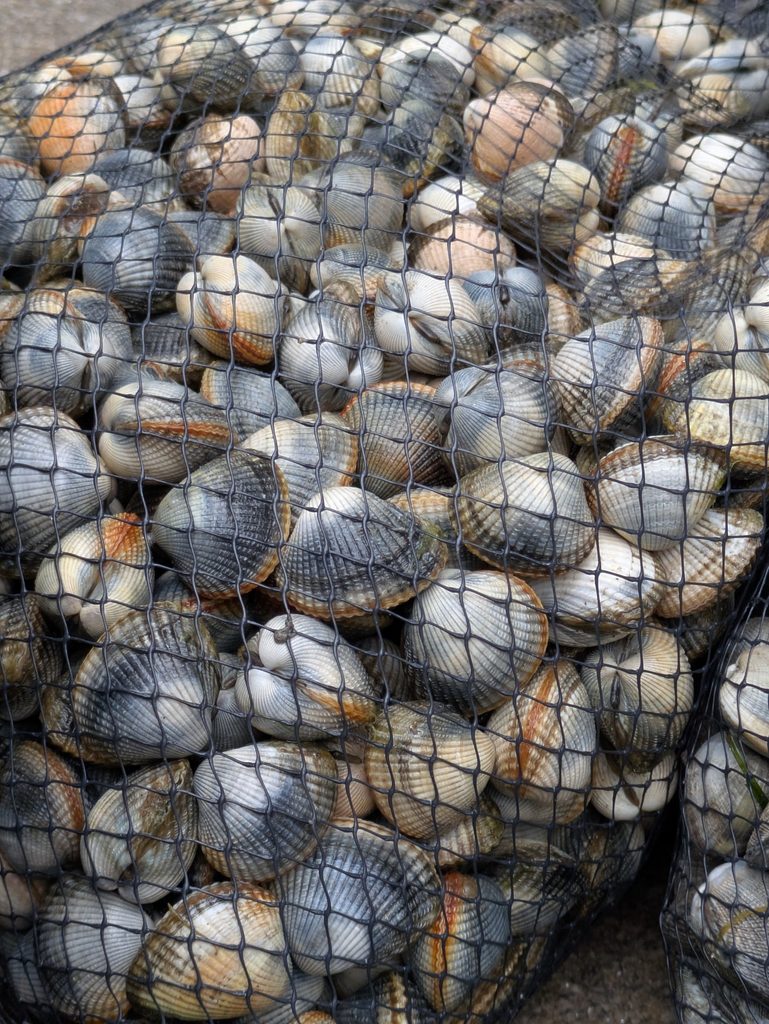
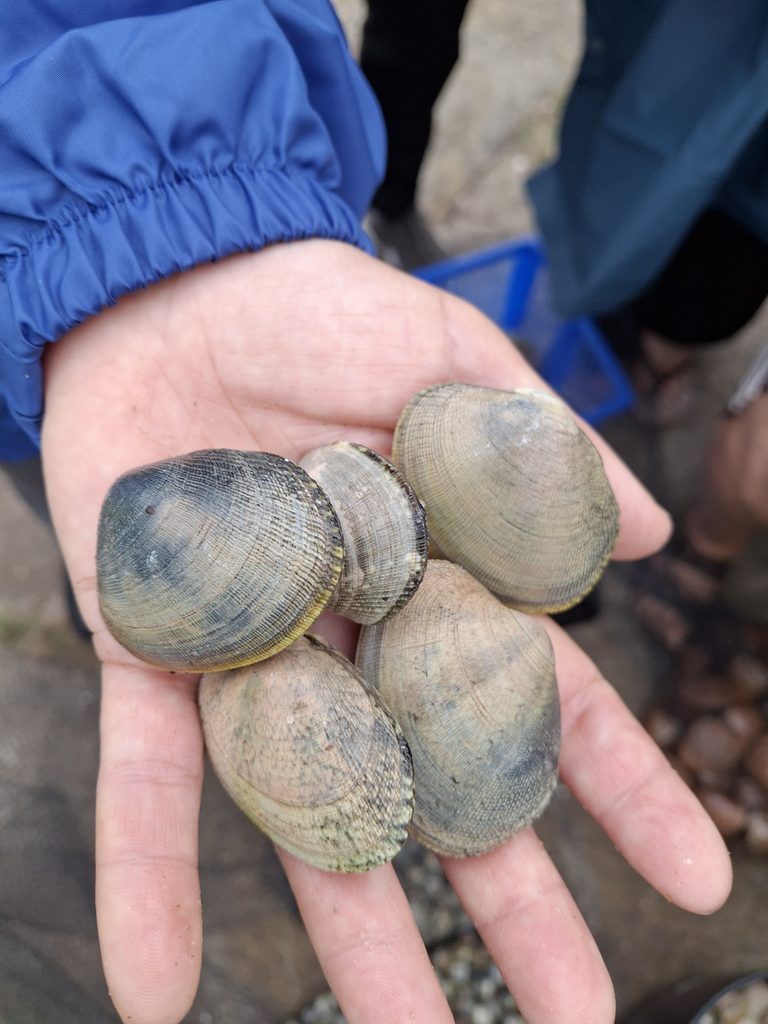
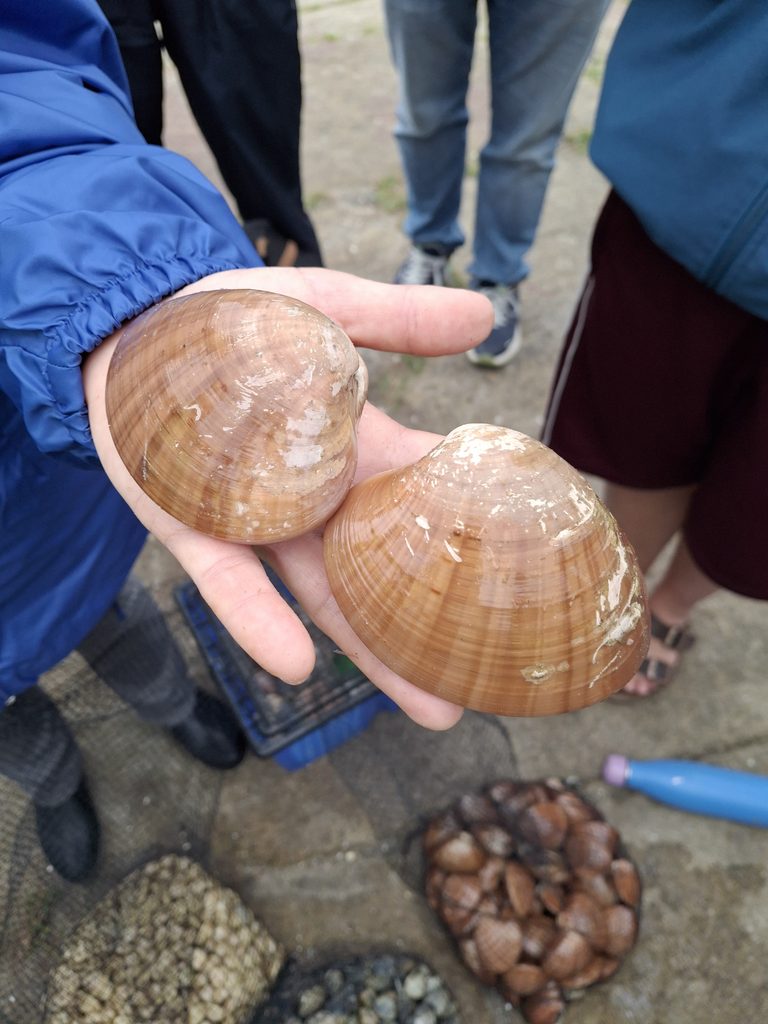
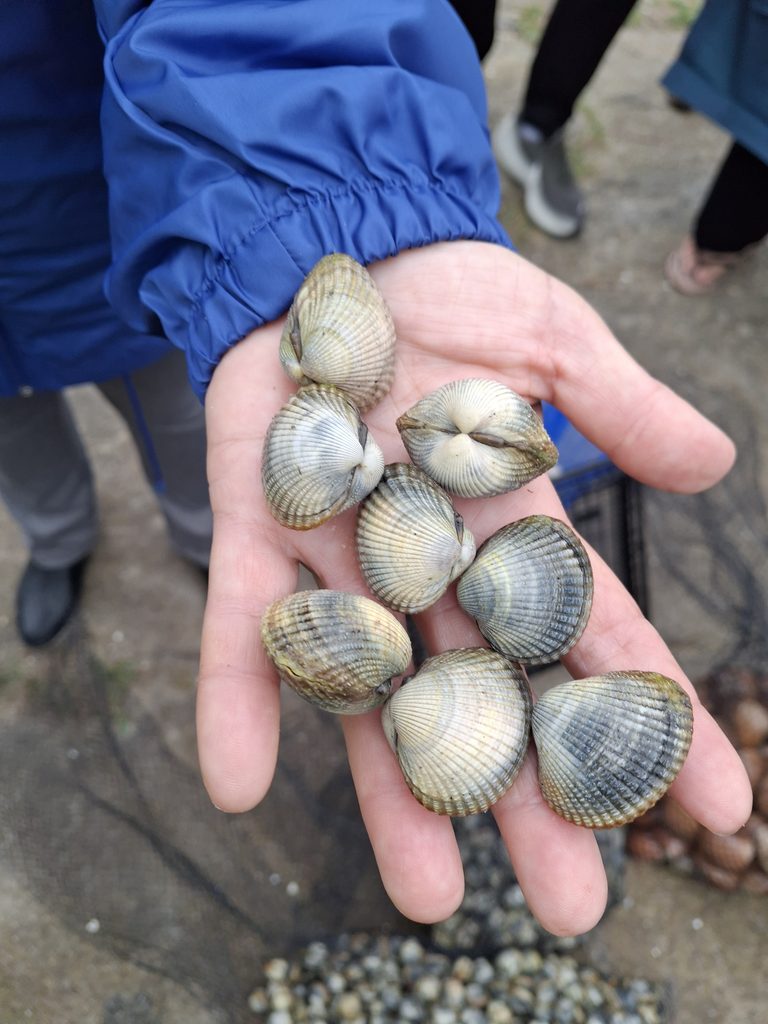
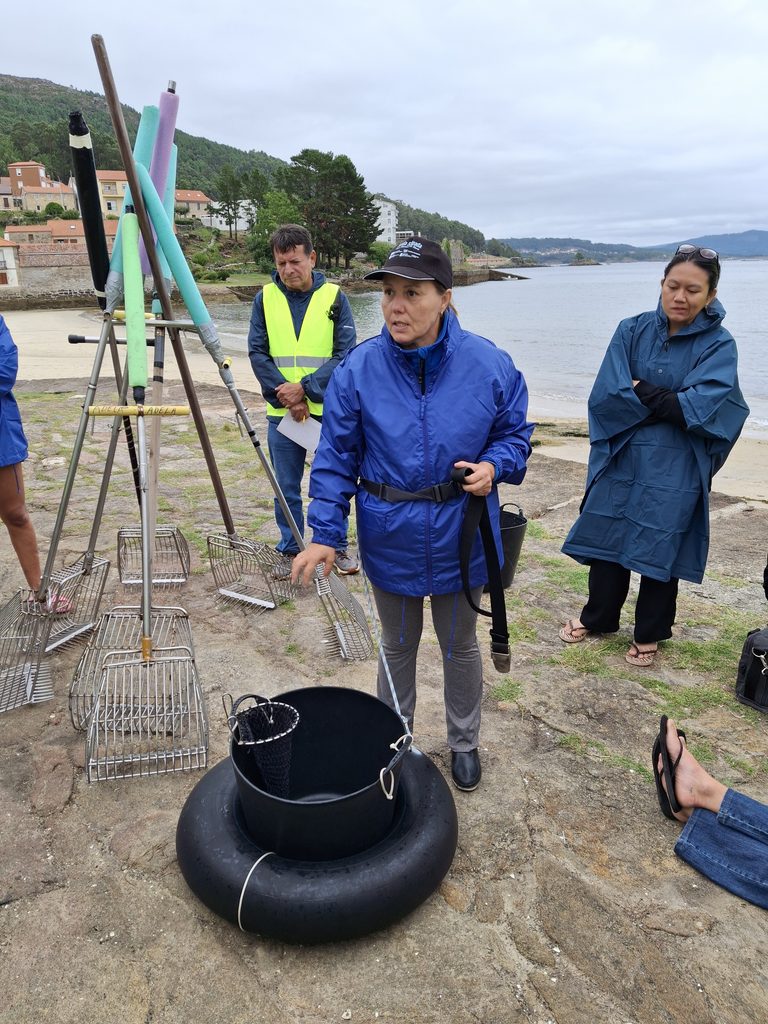
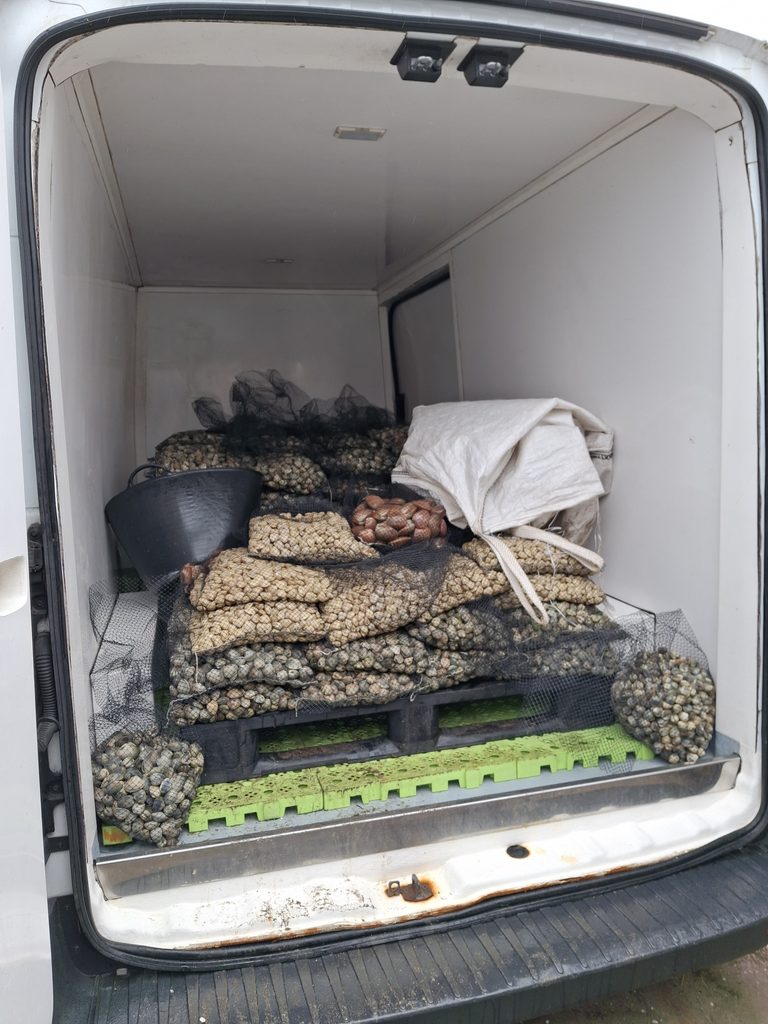
As the mariscadoras can only work around low tide, the work is restricted to five hours a day in the morning. During this time, they go into the sea and use modified cockle rakes to dig the molluscs out of the sand. The sand and the mussels that do not meet the required commercial size fall through the rake, while the others are collected in floating buckets. To prevent overexploitation of the shellfish populations, there are strict regulations in place regarding the number of gathering licenses issued [1] and the amount of shellfish that can be collected. The harvest is pooled by the association and brought to a local fish auction, where it is sold, and the mariscadoras get paid according to the amount of shellfish they collected. Typical mollusc species that are collected include cockles, manila clams, palourde clams, pullet carpet shells, smooth clams and surf clams.
How to avoid the “tragedy of the commons”
The Agrupación de Marisqueo a Pé da Confraría de Muros [3]is a subgroup of the local fisheries guild (confraría) responsible for decisions concerning the shellfish gathering on foot, like setting up three-year extraction plans, deciding the gathering grounds, monitoring ecological conditions, implementing sanctions for poachers, etc. Currently, there are 71 members in Muros, in accordance with the limit imposed by the regional government. Every four years, a new directive board is elected, but all major decisions (like the three-year-plans) are made democratically within the assembly of the mariscadoras. Through this participatory and community-driven structure, they fulfil the design principles for governing commons developed by Elinor Östrom and manage to avoid the “tragedy of the commons” by collectively using the given resources without overexploiting them [4].
Issues the mariscadoras are facing
Through their collective work and rule-setting, they manage to use the resources of the sea sustainably and minimise poaching. However, they also face several issues, like rising water temperatures because of climate change and decreasing salinity in the Ría due to the increasing occurrence of heavy rainfall in the region, which has an impact on some of the mollusc populations. Another issue is the increased import of shellfish from Portugal and France, which cannot be distinguished from regional products on the market.
Lessons learned from the mariscadoras
Through their collaborative way of working, the mariscadoras not only take care of the seascape and collectively govern its resources, but they also manage to make a historically overlooked and undervalued occupation visible. They are looking forward to continuing their work and thereby keeping a regional cultural heritage alive. So hopefully, also in the future they will continue selling shellfish at the seashore…
This blog post was written as part of the “Agrobiodiversity Summer School” in Galicia (Spain) in September 2026. This summer school is a cooperation project between the ZHAW Institute of Natural Resource Sciences, the Research Institute of Organic Agriculture in Switzerland (FiBL) and the Interuniversity Research Centre for Atlantic Cultural Landscapes (CISPAC) and is supported by the Mercator Foundation Switzerland.
References
[1] Xunta de Galicia, Consellería do Mar. (2025). Permisos de marisqueo a pé (PMP 2025). Retrieved September 11, 2026, from https://www.pescadegalicia.gal/Publicaciones/PMP2025/Informes/1.1.3.html
[2] Jiménez‑Esquinas, G., & Oubiña Martínez, N. (2021). Las mariscadoras de la ría de Muros‑Noia: Patrimonio, paisaje y sostenibilidad social. Anales de Arqueología y Etnología, 46, Article 021. https://doi.org/10.48162/rev.46.021
[3] Asociación Marisqueo Muros‑Noia. (n.d.). Marisqueo en la Ría de Muros‑Noia: Patrimonio Inmaterial. Retrieved September 11, 2026, from https://marisqueomurosnoia.com/
[4] Fernández Gestido, M., & Iglesias Pastoriza, T. (2022). Análisis de las agrupaciones de mariscadoras a pie en Galicia (España) a partir de la teoría del gobierno de los bienes comunes de Elinor Östrom. Teknokultura. Revista de Cultura Digital y Movimientos Sociales, 19(1), 89–97. https://doi.org/10.5209/tekn.77934
Microsoft Copilot was used to check spelling and grammar.