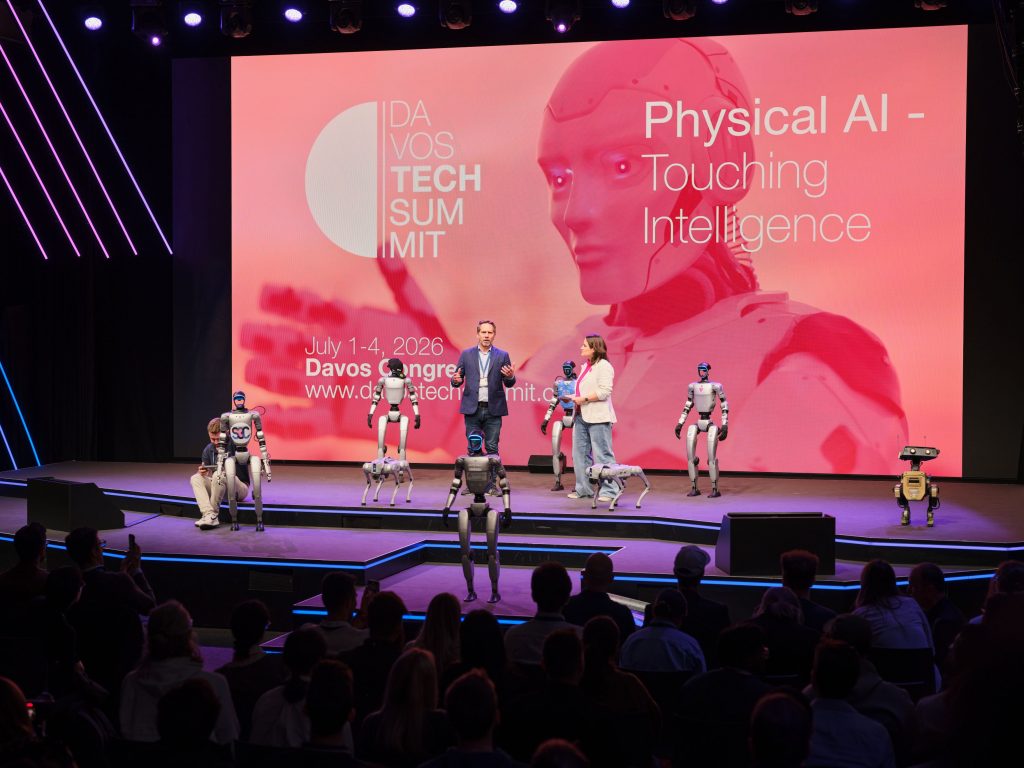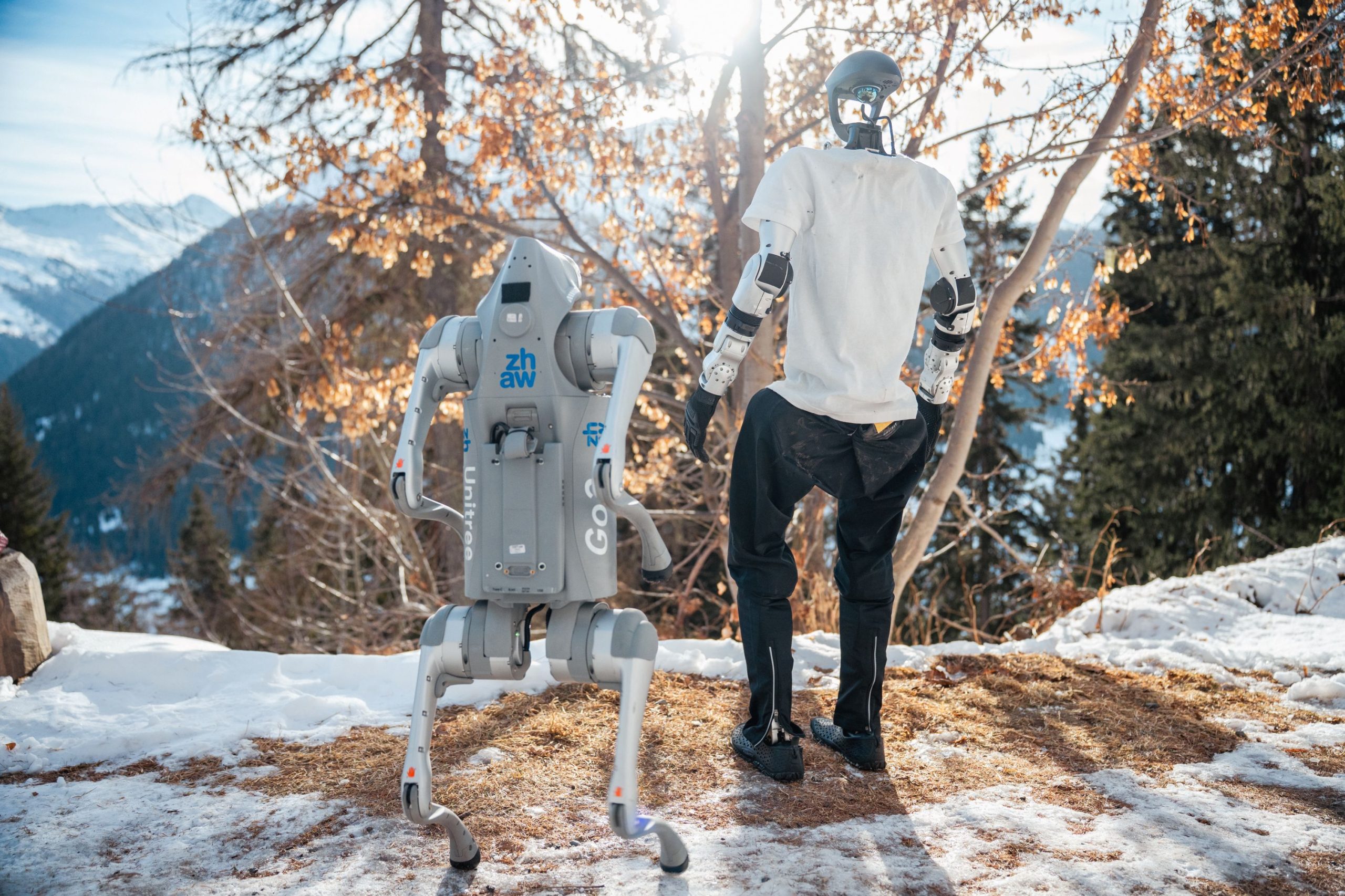
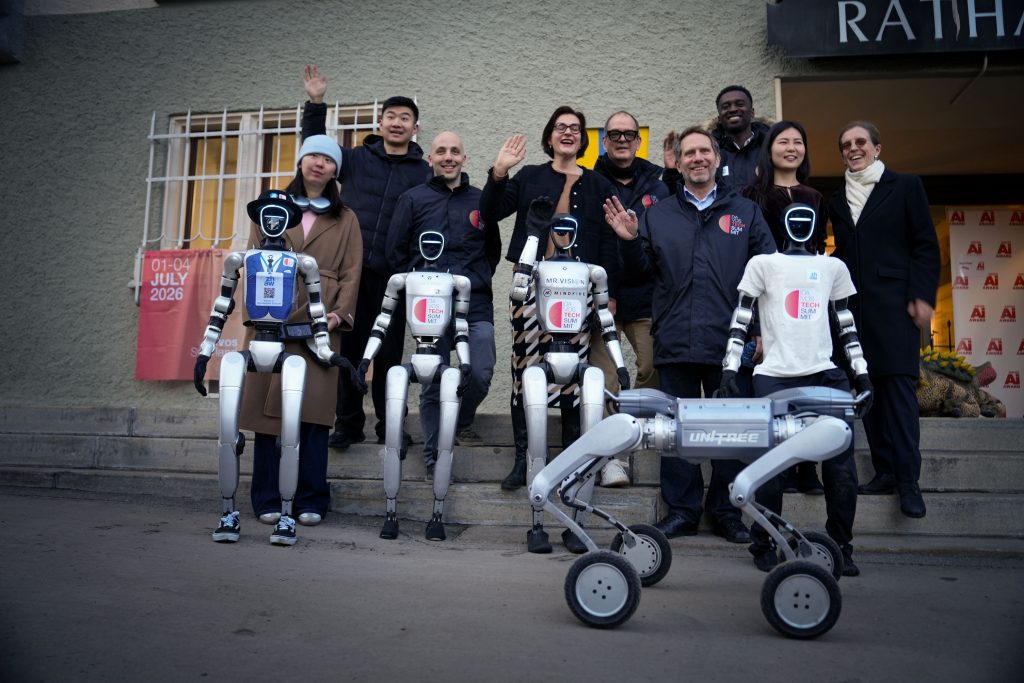
During the World Economic Forum, Davos is on the world’s stage. This year, robots took over the promenade and showed a preview of the robot city that the Davos Tech Summit will create in July. As partner of the AI House Davos, ZHAW brought together people from industry, academia, and politics.
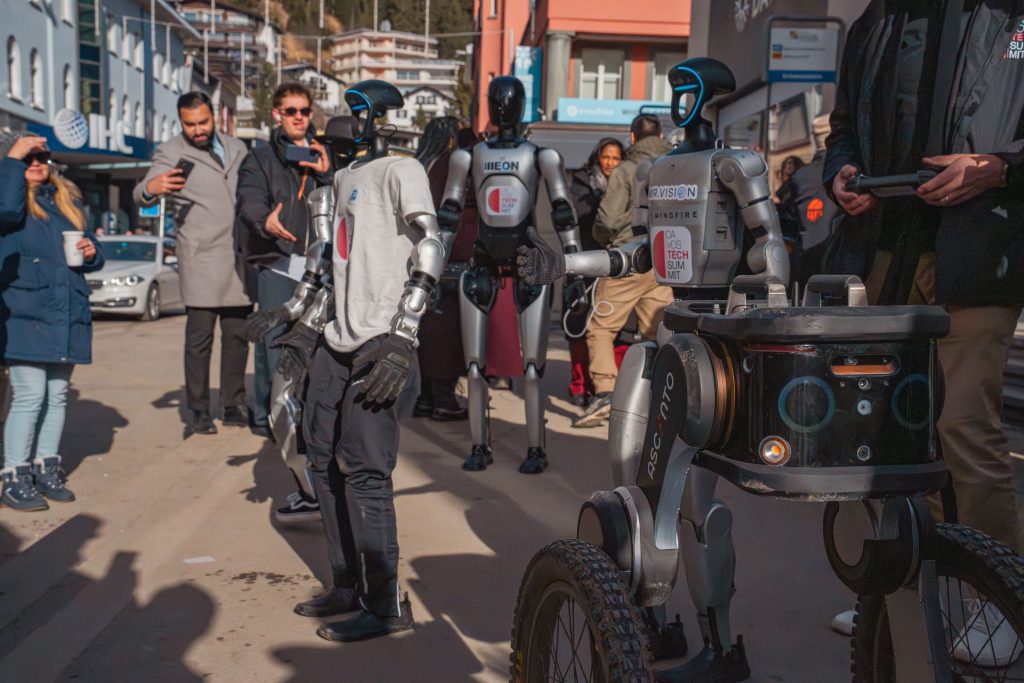
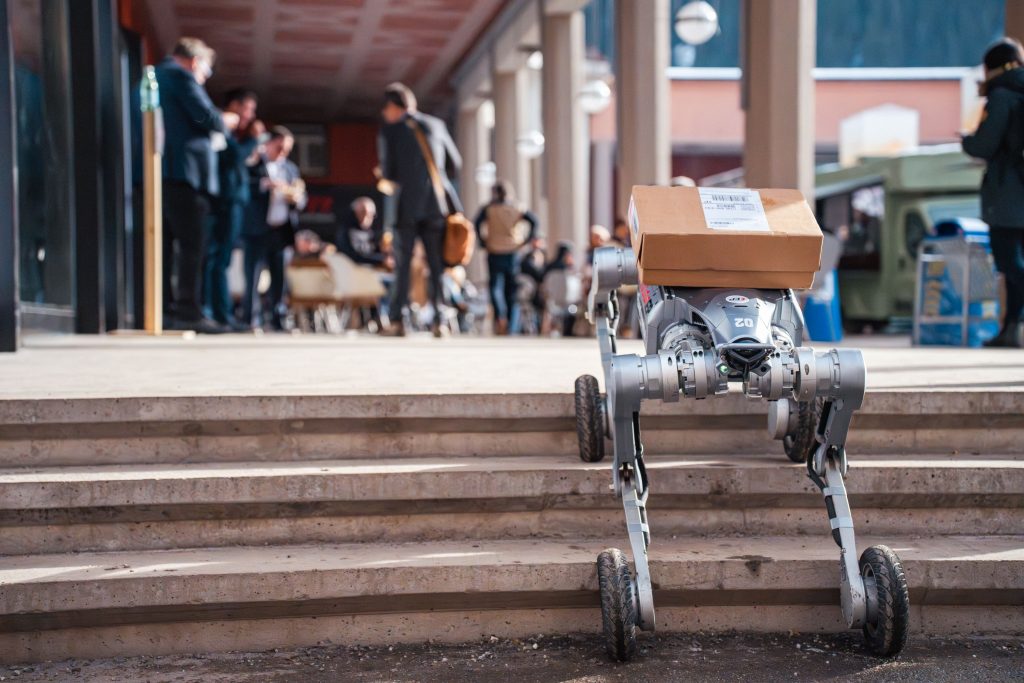
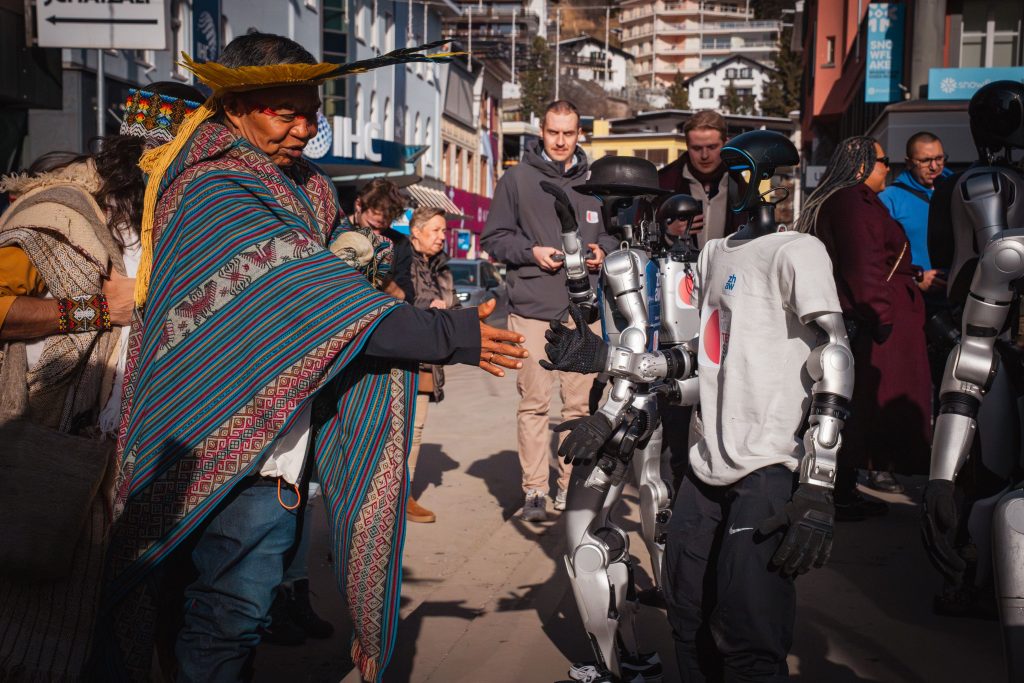
A small humanoid robot and a robot dog exit the Schatzalpbahn in Davos. They have just been for a walk, accompanied by ZHAW experts and a camera team. Their mission? To showcase in an approachable way what robots today can and cannot do. Joined by a diverse group of robots – from humanoids to wheeled robots and a drone – they position themselves on the promenade. Or rather: their operators steer them into position. Within seconds, people crowd around them and take out their phones and cameras. It is the first time so many different robots have gathered in a public space in Switzerland.
A family with two small boys points at the dinosaur robot. “What kind of dinosaur is that?” and “What do you use this robot for?”. The ankylosaurus is a robot dog in disguise and a real crowd-pleaser. Its movements look almost life-like, and its jumps lead to excited squeals from the audience. Some people interact with it: they pat their legs to call the dino to them or shoo it away when it jumps. Meanwhile, ZHAW’s humanoid robots KAI and GIGI are busy shaking hands and taking photos with onlookers. For now, the ZHAW robots are used for research and education and, in shows like these, to provide a low-threshold entry point into robotics.
Whether it was in front of TV cameras, on the street in spontaneous conversations or in the panel in AI House, the topics where all around similar core questions:
“What can these robots do, and why do some of them look like humans?”
We are not yet technologically advanced enough to create autonomous humanoid robots that can move around in any environment without remote control and interact with humans. Right now, humans steer the robots on the promenade. At the push of a button, some of the robots can wave, shake hands, jump, dance, or talk. As soon as something looks human, people’s expectations are enormous. However, anyone researching how to make robots more human-like quickly realises just how complex and versatile the human body and mind are. Some companies build human-like robots because human-like features can be useful for specific tasks. This does not mean that robots have to look exactly like humans, and for some tasks, it might even be detrimental.
“Where are robots being used right now?”
We use robotics a lot, for instance in agriculture and logistics. With the world population growing, we need more food, which is why we employ vertical farming, where drones are used to water plants. In logistics, drones can carry out inventory in warehouses – for example, IKEA uses this method. Robots can also inspect and maintain our infrastructure, such as bridges for damage. And robots can operate in dangerous environments, such as fires or in search and rescue. There exist many Zurich-based companies and solutions, for instance Ascento’s security robots, Loki’s cleaning robots and Anybotics’ inspection robot. Robots are increasingly also being used in gastronomy (cooking robots) and in healthcare.
“What are the use cases for humanoid robots in the future?”
Humanoids will play a key role in dynamic and unstructured industrial environments where today’s automation and traditional robotics solutions still struggle. Robots can also be used to assist the elderly, injured people, or people with disabilities. At home, it remains to be seen whether robots will one day be able to do more than simple tasks like folding clothes or loading the dishwasher.
“What are you doing with all these robots in Davos?”
As a co-initiator, ZHAW is promoting the Davos Tech Summit – a new yearly technology event taking place from July 1-4, 2026. For the first edition, the organisers create a robot city, a live experience of what robots can do today and in the future. The team organises a congress and showcases real use cases all across the city. The summit will bring together leaders from industry, academia, and politics to explore the future of robotics and intelligent systems in the physical world.
“Why is the summit in Davos, and why the focus on physical AI?”
Switzerland is a robotics hub with the two strong centres in Zurich and Lausanne. There are great universities, a lot of talent, and strong collaboration between academia and industry, which drives innovation. Davos has excellent infrastructure for large events – as we can see during WEF.
The first edition of the summit will be on physical AI, i.e. AI that can interact with the physical world. Experts believe that, just as there was a ChatGPT moment for AI, there will also be a physical AI moment.

More information
- Davos Tech Summit: Information and tickets
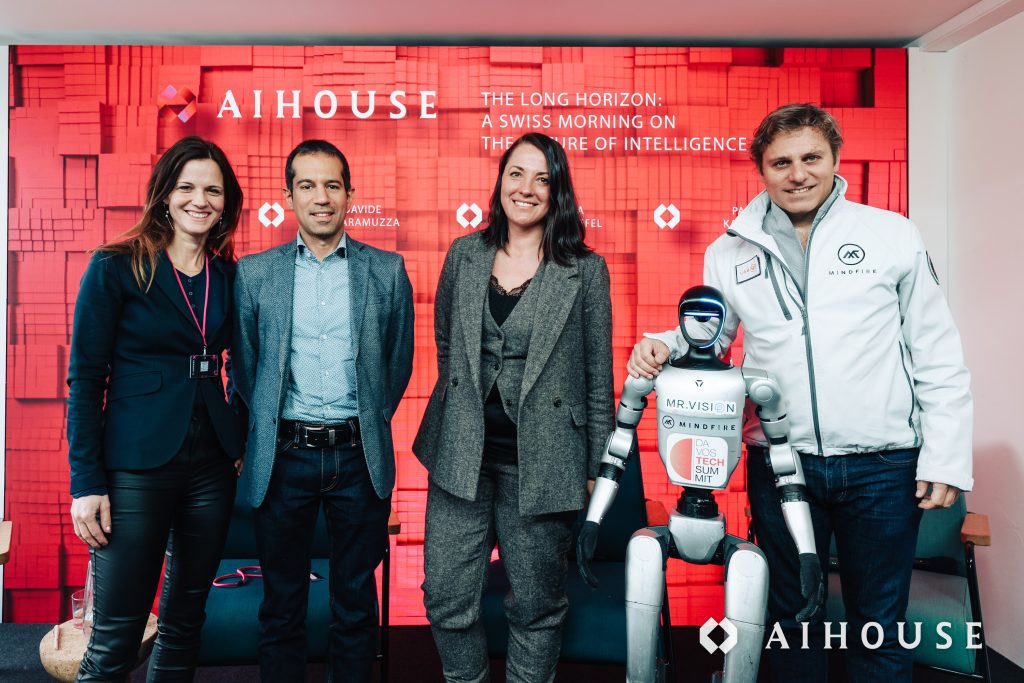
- Panel at the AI House Davos: “The Long Horizon: A Swiss Morning on the Future of Intelligence” with Rebecca Brauchli, Head of ZHAW digital, Davide Scaramuzza, Professor of Robotics and Perception at the University of Zurich, Nadja Christoffel, Head of Regional Development Prättigau Davos, and Pascal Kaufmann, Founder and CEO of Mindfire and Lab42.
- Preview of the Davos Tech Summit in national and international news: 20 Minuten (Inverview with Theresa Schmiedel, Head of the Institute of Business Information Technology, School of Management and Law), Davoser Zeitung, Xinhua News, WION, NTV, National Post, etc.