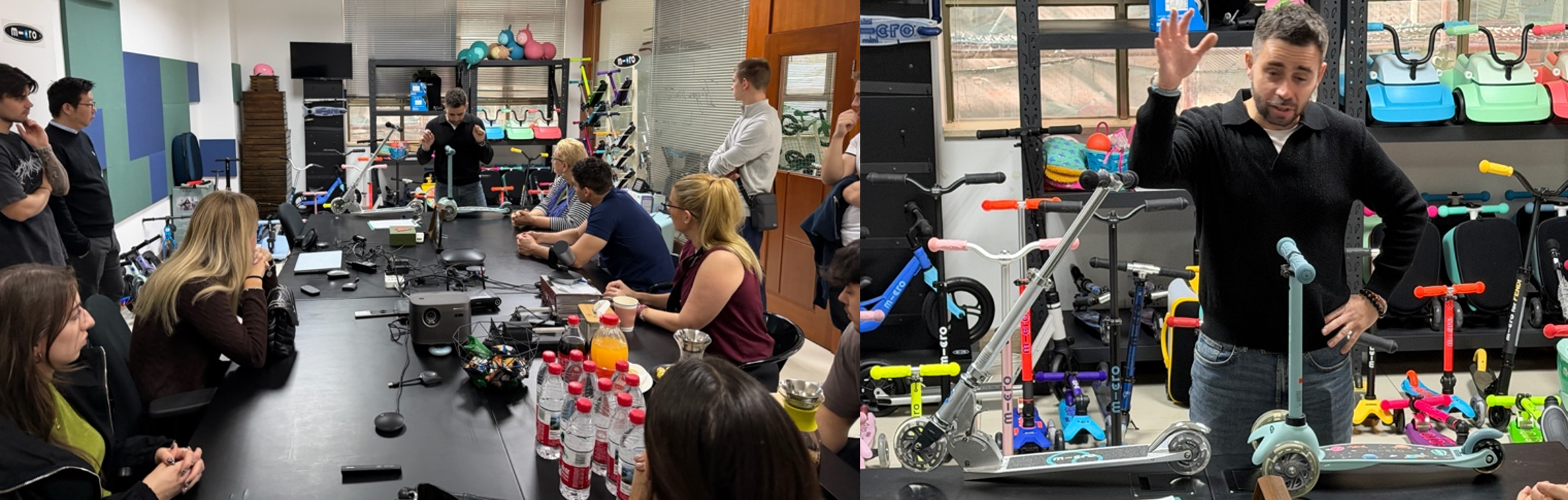
We started this Friday off with a 1.5-hour-long bus ride to Zhongshan. It’s a third-tier city close to Shenzhen, which has many industrial manufacturing facilities, some of them even owned by Swiss companies. The first stop of the day was at one of them. Micro Mobility Solutions is a Swiss company best known for its scooters. The founder of the company actually invented them. Now they are also producing small electric vehicles (not manufactured in China, though). After arriving, we got a quick introduction to the company. Many of us were pretty surprised by the variety of products and the innovation that the company—where we had all bought our first scooters—has developed.
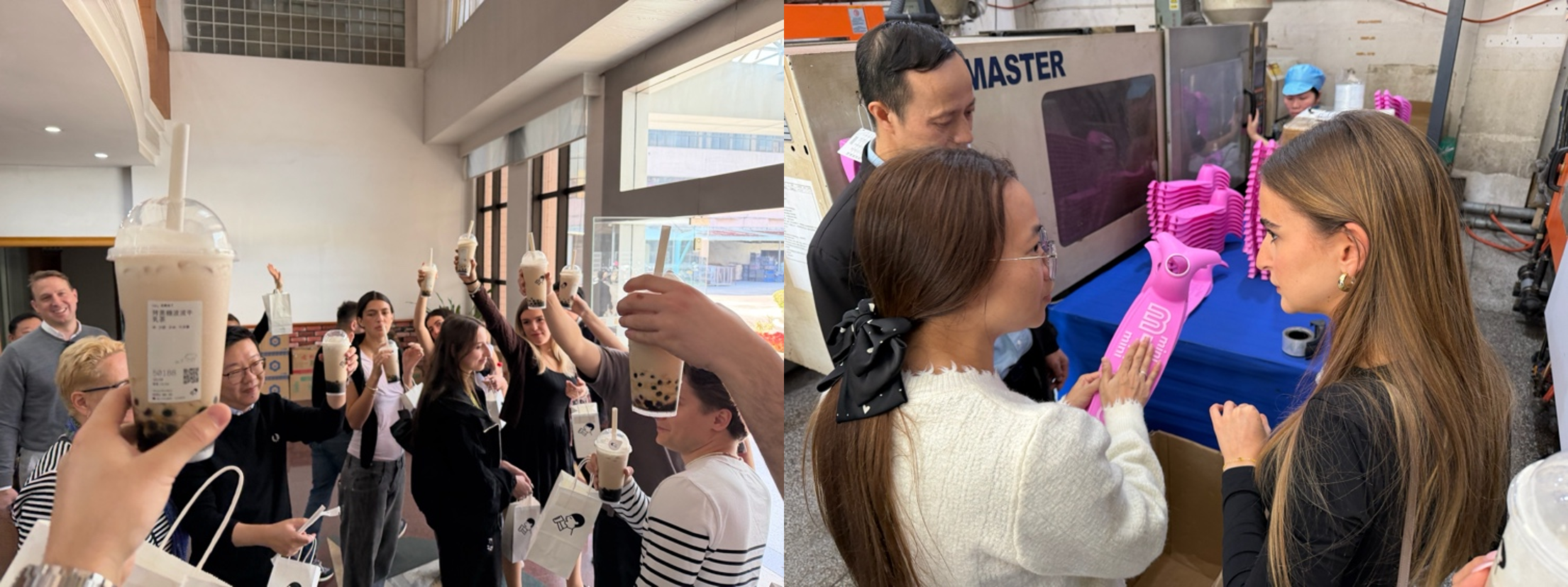
After getting up to date with all the information regarding the company and its products, it was time to learn how they are made as well. So we took a quick bus tour to the factory. We were warmly welcomed in true Chinese hospitality fashion with some bubble tea.
Now that we were refreshed and ready, it was time to go into the production site. We started off with the plastic molding machines. That’s where the boards for a specific kids’ scooter line are made. It was the first time on this study trip that we actually saw the famous Chinese manufacturing processes, and we were all instantly mesmerized by the machines and employees focused on their work.
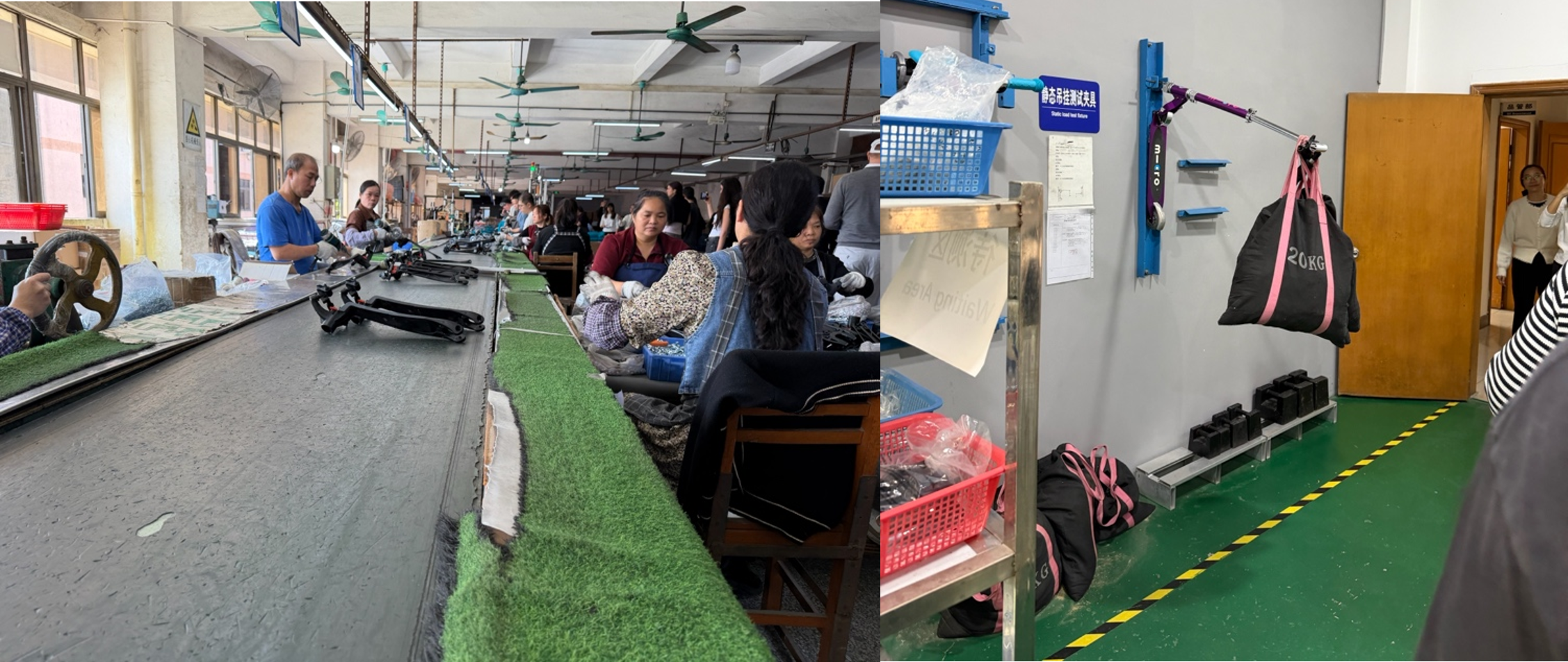
We walked through many different manufacturing processes and saw different types of logo application. Some were more old-school methods, like water-immersed sticker application, but there were also newer ones, such as UV light printing. We then arrived at a classical assembly line, where all the parts that have been manufactured are put together into one product. Before heading off for lunch, we even saw the testing facility where Micro makes sure that all products meet their high standards. This is especially important because they are currently participating in collaborations such as Porsche and others.
After those impressive sights, we were all quite hungry. Luckily, the boss of the factory, Mr Du, invited all of us for lunch at a nearby restaurant. At the entrance, you could see fish and turtles alive and ready to be cooked if ordered. It was a bit of a shocking sight for some of us, but nonetheless very interesting. We then sat down and enjoyed an amazing lunch, ranging from regular salad to fried rice, dumplings, and some more exotic Chinese food. Overall, it was really delicious, and the hospitality was top-notch once again. We had really interesting conversations with our hosts at the table. After we finished eating, it was time for the group picture and then to say goodbye.

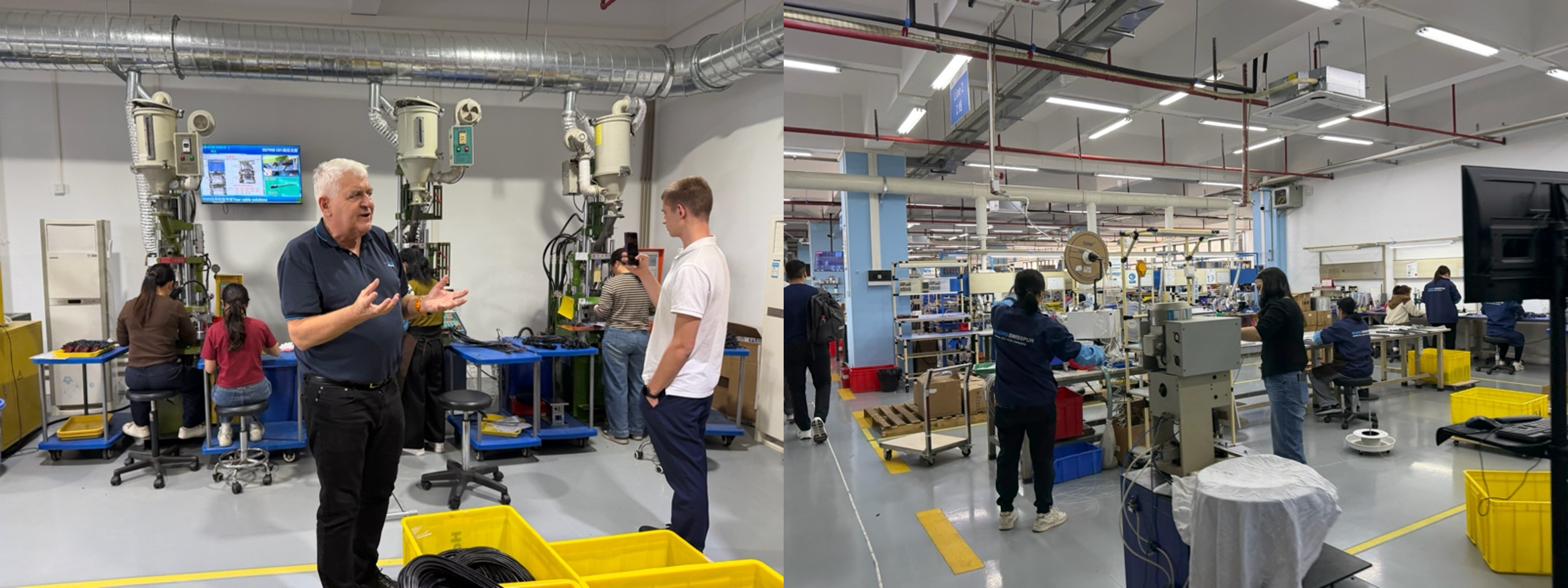
We arrived at our next stop pretty quickly. Garry had picked out a really interesting company for us to visit. It’s called Howag Swisspur, a cable-harness manufacturing and automation solutions company. We were greeted at the door by a charismatic man who turned out to be the General Manager and majority stakeholder of the company, René Forster. He first gave us an introduction to his company. It turns out he has been running it for almost 20 years now and employs around 100 people. After answering many of our questions, we began the tour of the company. He first walked us through the logistics area, then the cable-harness manufacturing, and finally the automation solutions site. It was an interesting mix of semi-automated and traditional labour. By then, we were all wondering why he was doing business in China. Luckily, he gave a whole presentation to answer this question. It turns out that a lot of it was down to chance. He started working in Indonesia for a while, and from there he eventually ended up in China. We were all truly amazed by his entrepreneurial spirit and what he has achieved.
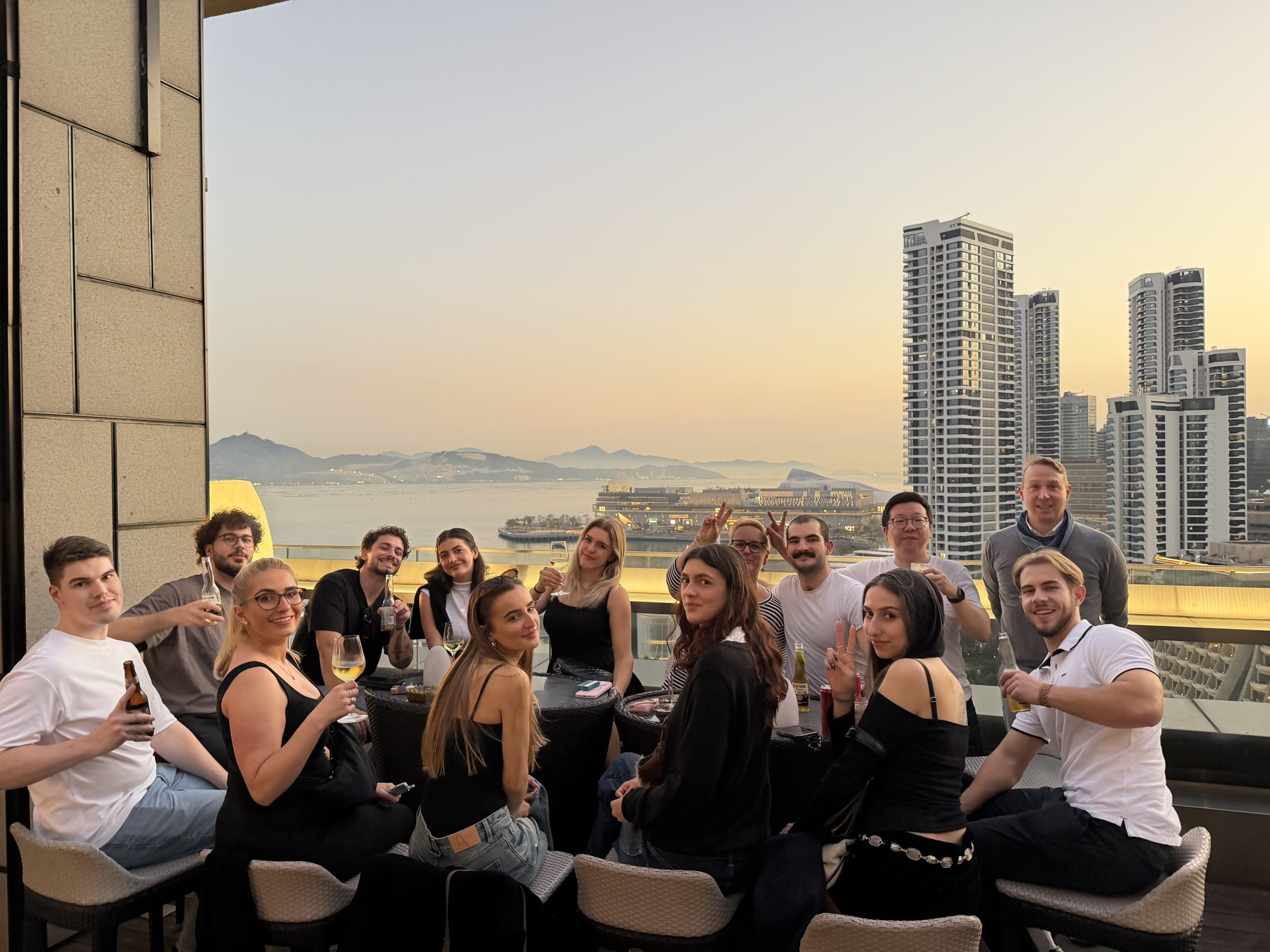
Our last stop of the whole study trip is where it has started 5 days before, on the rooftop of our hotel. We all got together and reminiscent about this amazing experience and what we will take with us from this trip.