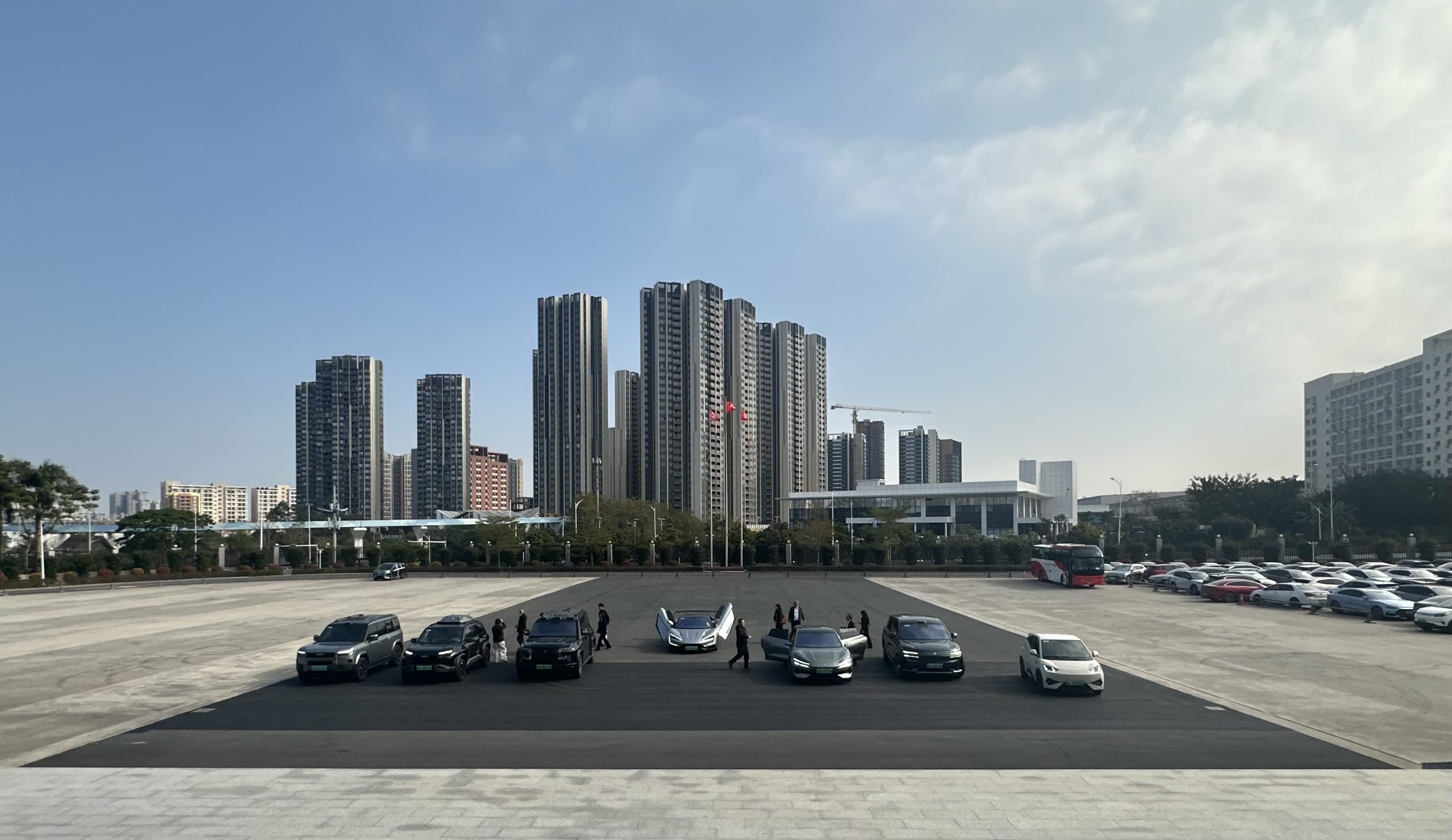
Our day began with a visit to the headquarters of BYD, one of China’s most influential companies in the field of electric mobility and sustainable technology. The visit provided a comprehensive overview of BYD’s history, technological capabilities, and long-term vision for sustainability.
We started with a showroom tour and an introductory presentation, including a video outlining BYD’s mission and its strong focus on sustainability across the entire ecosystem. Founded in 1994, BYD has grown from a battery producer into a global technology leader, embedding sustainability not only in its products but throughout its entire value chain.
During the tour, we were introduced to a wide range of vehicles and technologies. Particularly impressive were demonstrations of advanced vehicle capabilities, including off-road and desert performance, water-floating functionality, and a sideways self-parking feature. Some models demonstrated exceptional strength, including the ability to pull heavy trucks. Additional innovations included a built-in drone system, the DiLink intelligent network connecting vehicle systems, and a body control system that allows vehicles to dynamically adapt to obstacles such as potholes.
A notable highlight was the presentation of a unique red Chinese dragon prototype, a one-of-a-kind model. We also examined a demonstration model of BYD’s production line, which illustrated the company’s high level of vertical integration and manufacturing efficiency. Beyond automotive technology, BYD also introduced the SkyShuttle system, a battery-powered monorail solution for sustainable urban transportation.
After the morning program, we had lunch at Diandoude, a well-known dim sum restaurant. We enjoyed a variety of freshly prepared dim sum dishes accompanied by tea.
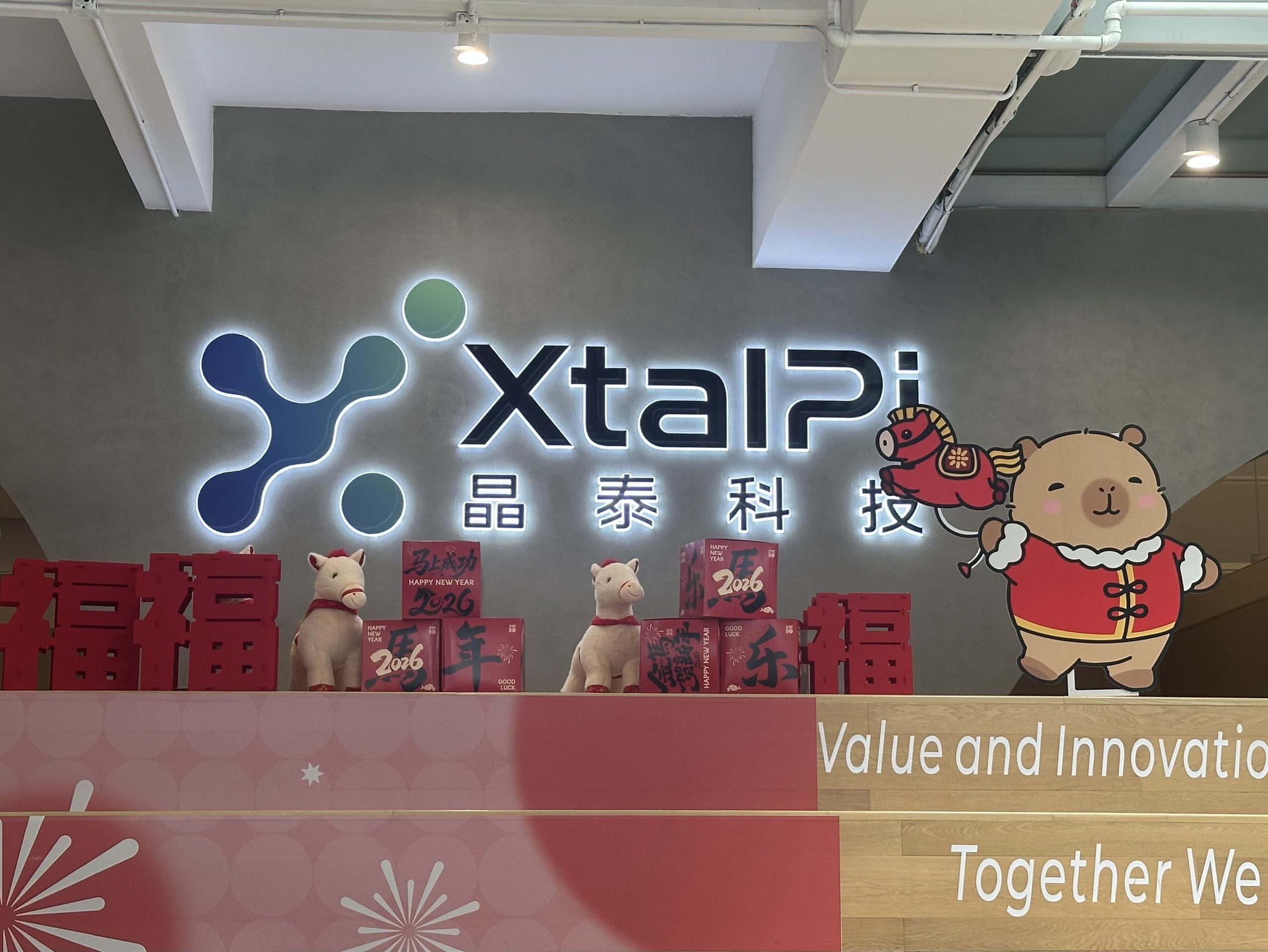
In the afternoon, we visited XtalPi, an AI-driven drug discovery company founded in 2015. XtalPi leverages artificial intelligence, quantum physics, and robotics to accelerate pharmaceutical research and development.
The presentation introduced the company’s history and core technologies, with a strong focus on the use of AI models for molecular reaction prediction and drug design. A central theme was the shift from traditional human-based prediction methods toward AI-driven predictors, enabling faster, more accurate, and more scalable research processes.
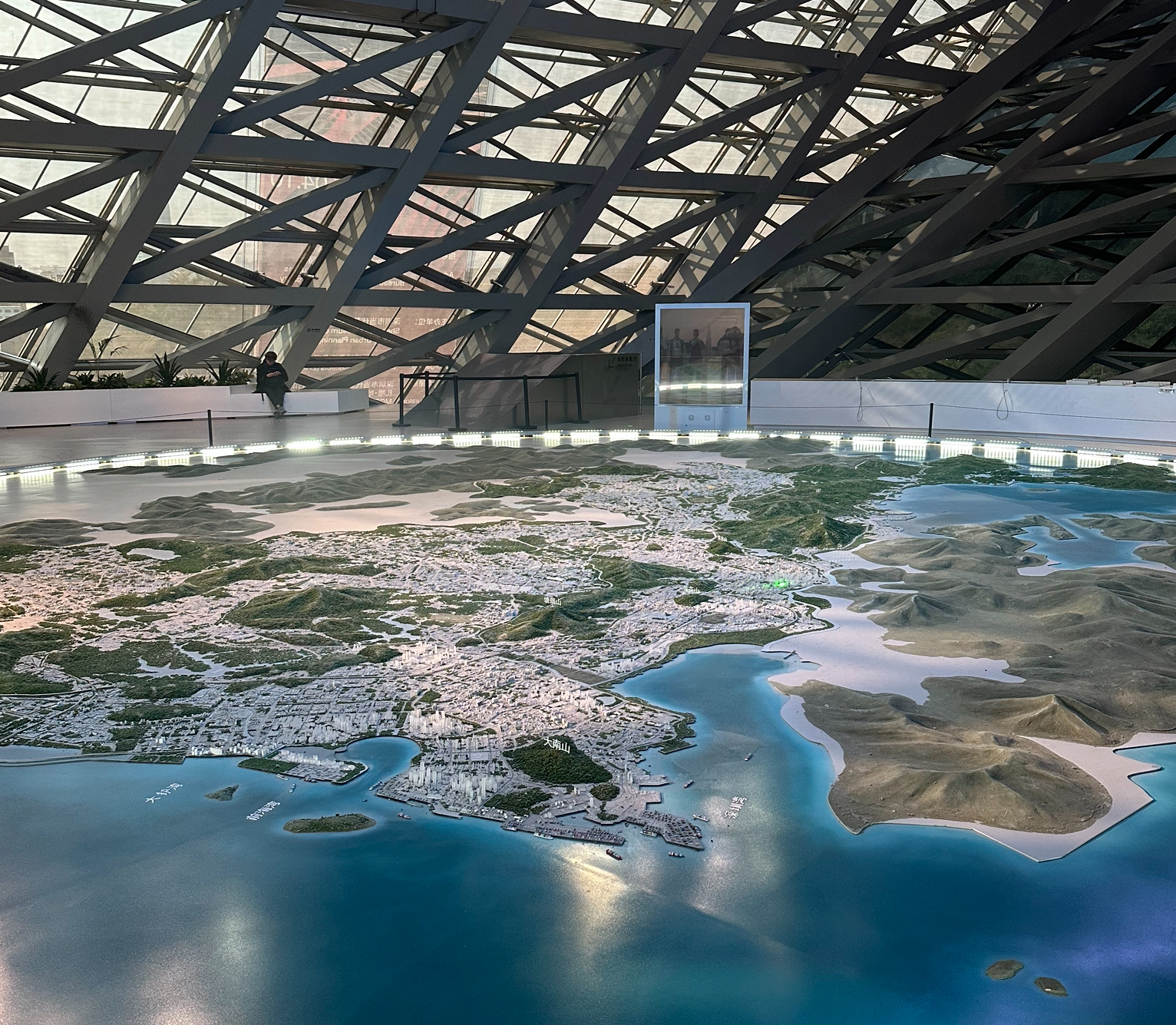
After our visit to XtalPi, we went on a guided tour of the Shenzhen Museum of Contemporary Art and Urban Planning. The visit provided a comprehensive overview of Shenzhen’s remarkable development, tracing its transformation from a small fishing village into one of China’s leading megacities and innovation hubs.
Through detailed models, visualizations, and explanations, the guided tour highlighted the city’s rapid urbanization, long-term planning strategies, and close integration of industry, technology, and infrastructure.
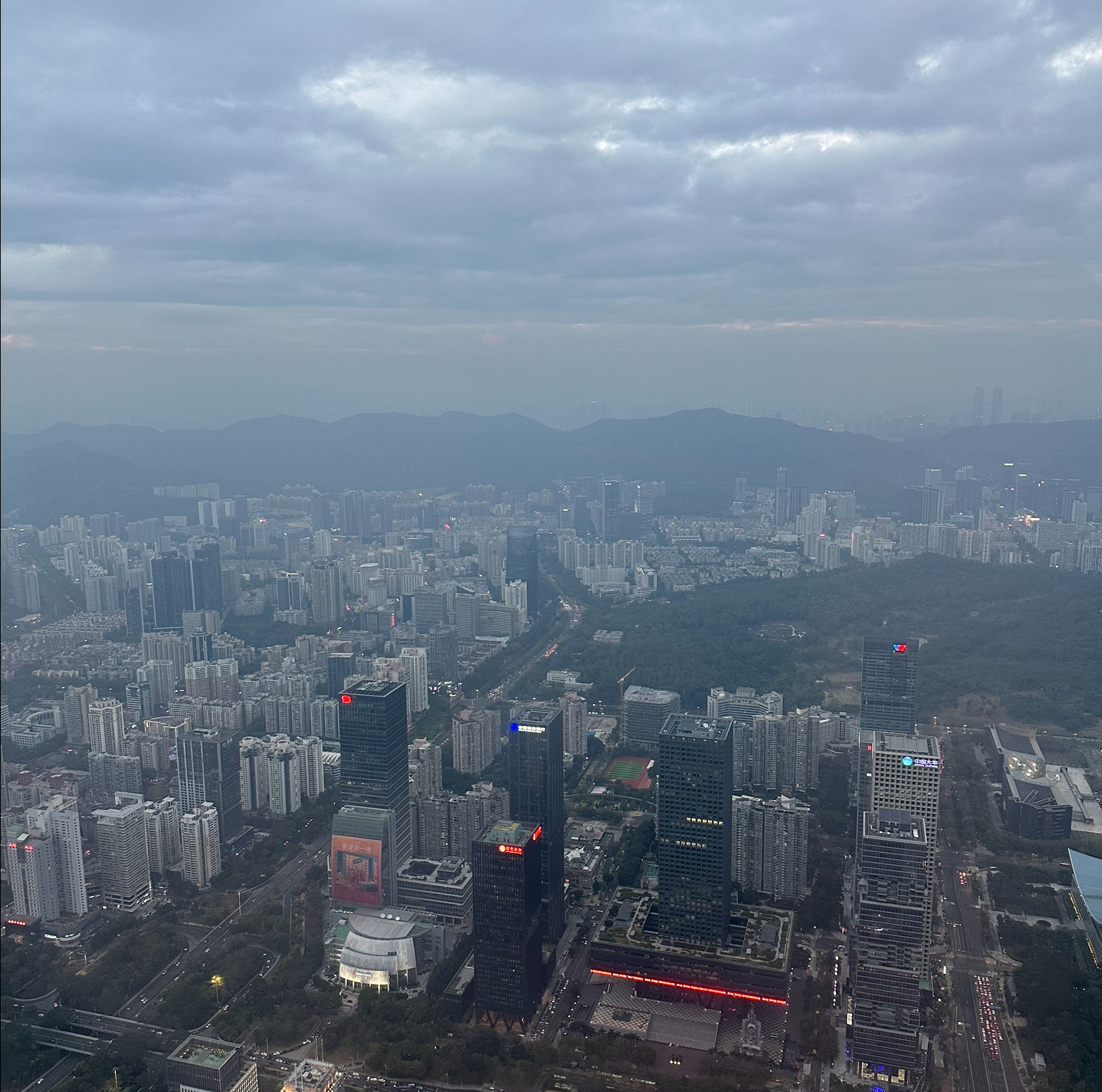
We concluded the day with a visit to the free Sky View Deck, offering a panoramic view over Shenzhen. From above, the scale and density of the city became especially tangible, with high-rise buildings, infrastructure, and urban districts stretching far into the distance.