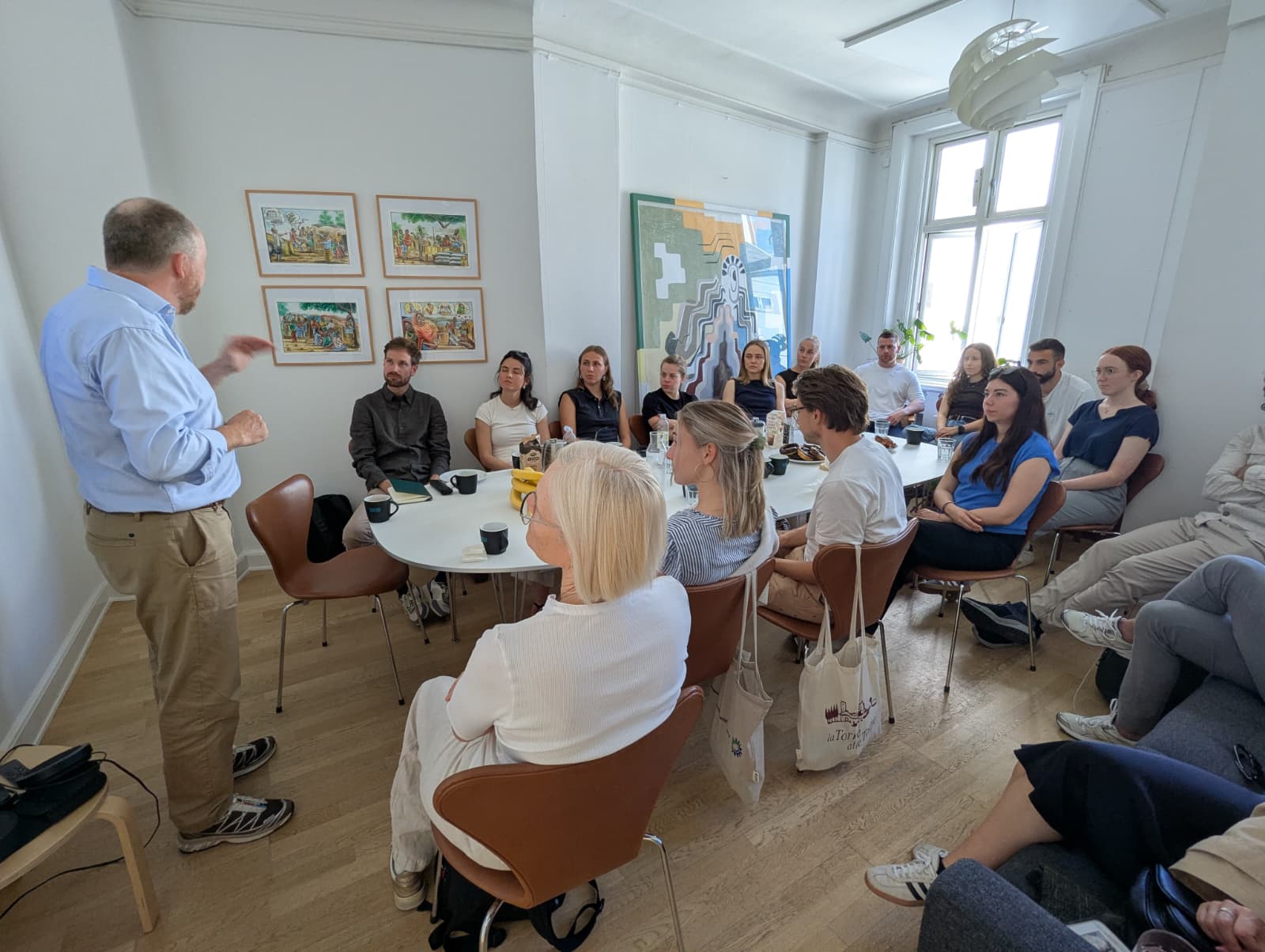
Our day started with a visit to Tana-EHG, a Copenhagen-based consultancy working in the fields of international development cooperation and international relations. Tana-EHG does not implement projects on the ground. Instead, it supports governments, international organisations, and development partners in designing, analysing, evaluating, and improving programmes.
During the visit, not only did we receive a delicious selection of chocolate and cinnamon Danish pastries, but we also gained valuable insights into what development programs they had worked on in the past, especially in politically fragile contexts. We talked about programme design, evaluation, and monitoring, as well as the challenges of working in vulnerable and conflict-affected regions and environments. What made the exchange especially interesting was the practical perspective. One of the main takeaways for us was that being aware of the context in which the work was carried out and being able to adapt to it were essential.
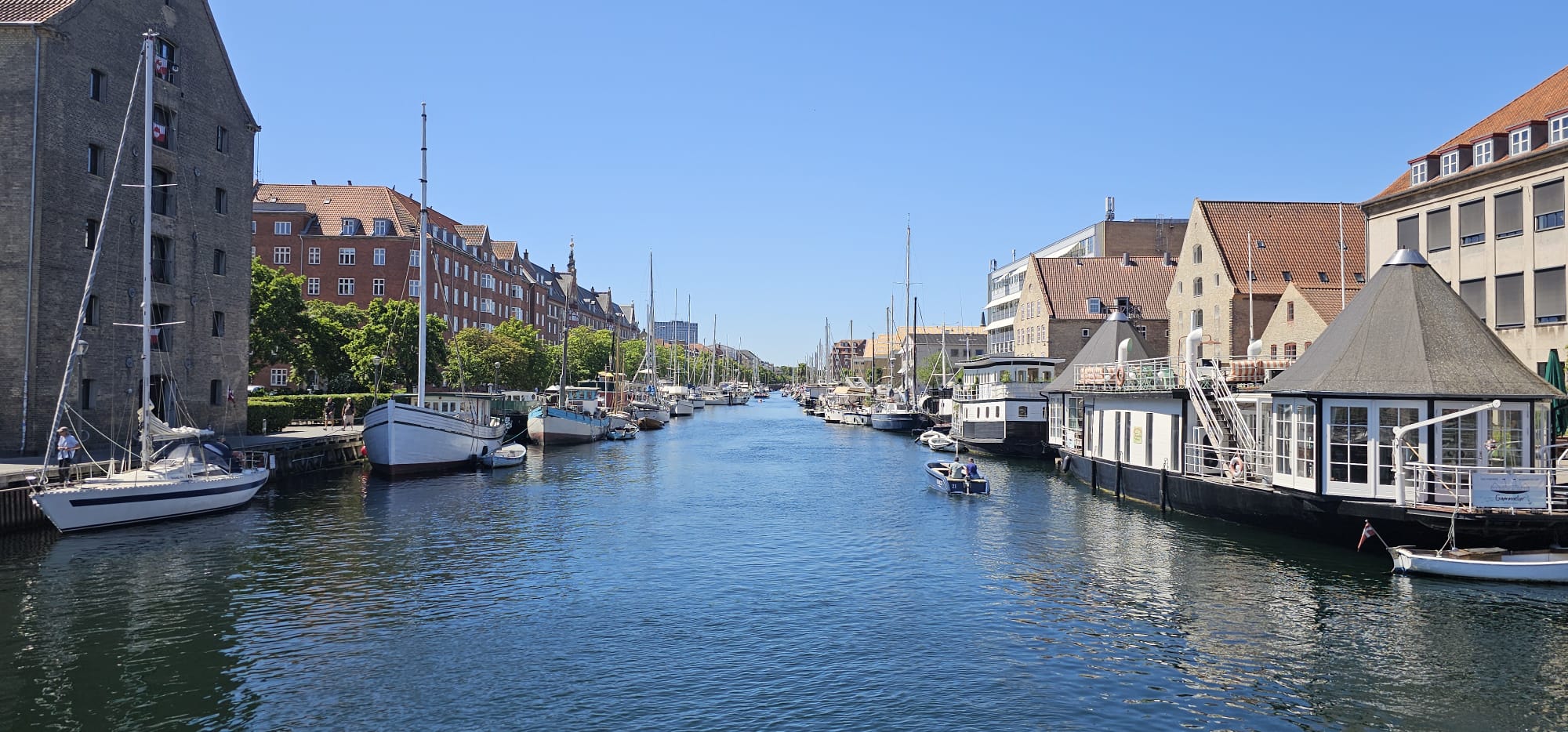
As we had a long break, some of the students used the time to cool down in the sea and enjoyed a delicious lunch on what was another scorching day before our next session.
In the afternoon, we met with representatives of Klimabevægelsen i Danmark, the Danish Climate Movement. Founded in 2008, the organisation acts as an umbrella movement, uniting various climate groups and activists throughout Copenhagen and Denmark. The conversation gave us a different, but equally important, perspective on policy, democracy, and climate action. It also gave us a better understanding of how the climate movement is organised and structured in the country.
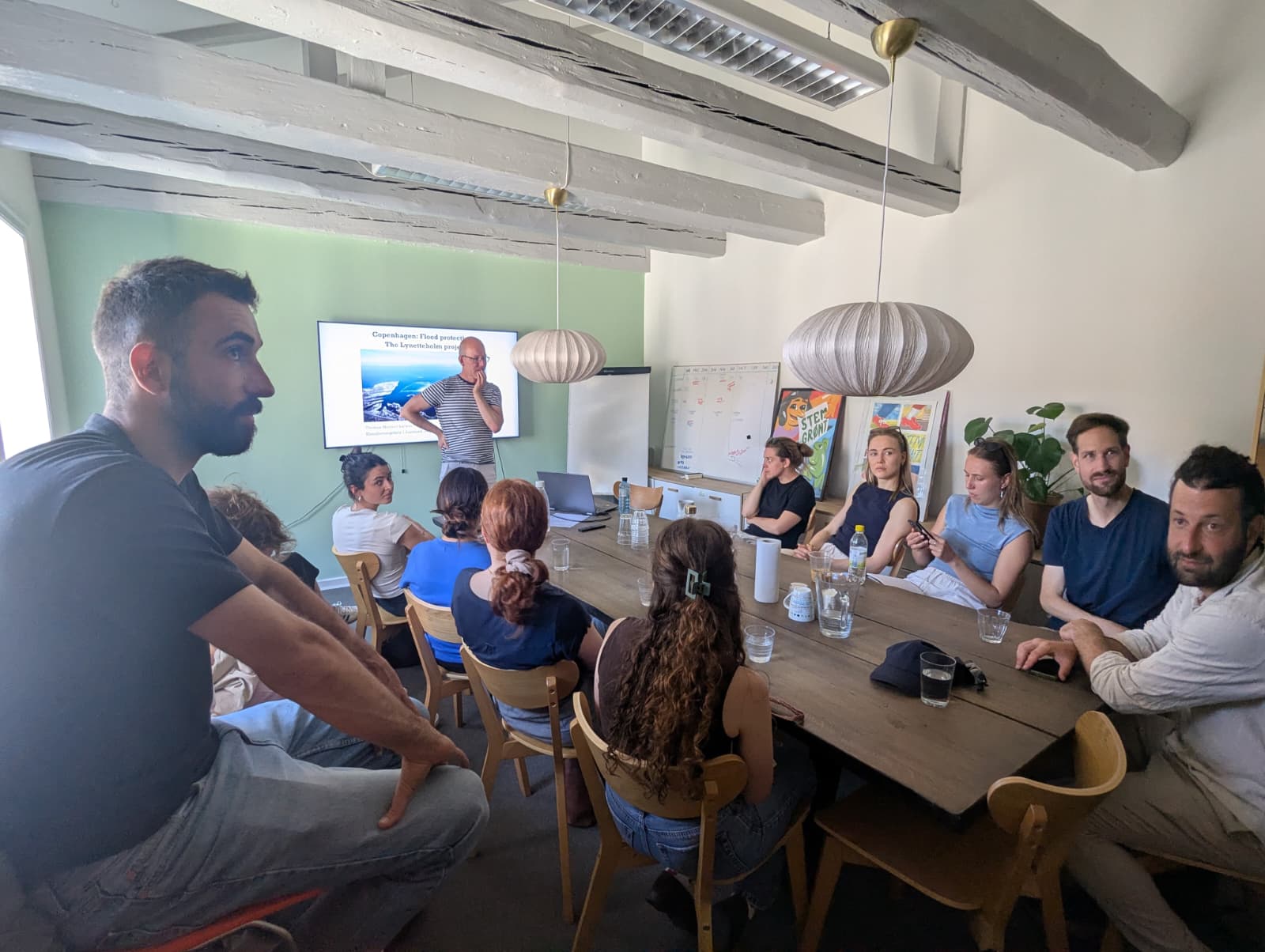
The main focus of the meeting was the infrastructure project “Lynetteholm”, a large artificial peninsula in Copenhagen’s northern harbour. Officially, Lynetteholm is presented as a project for climate adaptation, coastal protection and future urban development. However, the climate movement strongly questions this framing. The project raises serious concerns about environmental impact, public participation, and the political advancement and justification of large infrastructure projects, according to their perspective. Not only the ecological but also the financial concerns were discussed. The visit helped us gain different insights from a civil society movement on a controversial topic that concerns the ecological and financial future of Copenhagen.
Overall, the day offered two very different angles on international development cooperation and environmental policy on a municipal level. We enjoyed gaining valuable insights and engaging in constructive discussions, along with experiencing plenty of sunshine.