
Insights from the AI in Financial Services & Beyond track at the AI+X Summit, Zurich, 1 October 2026
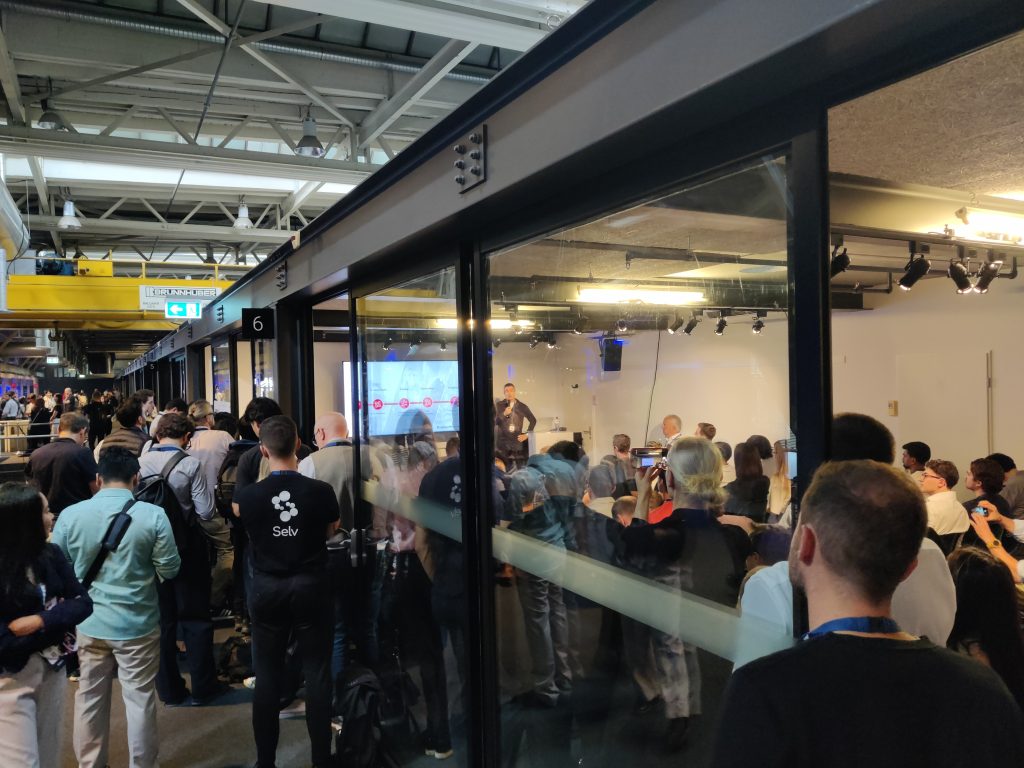
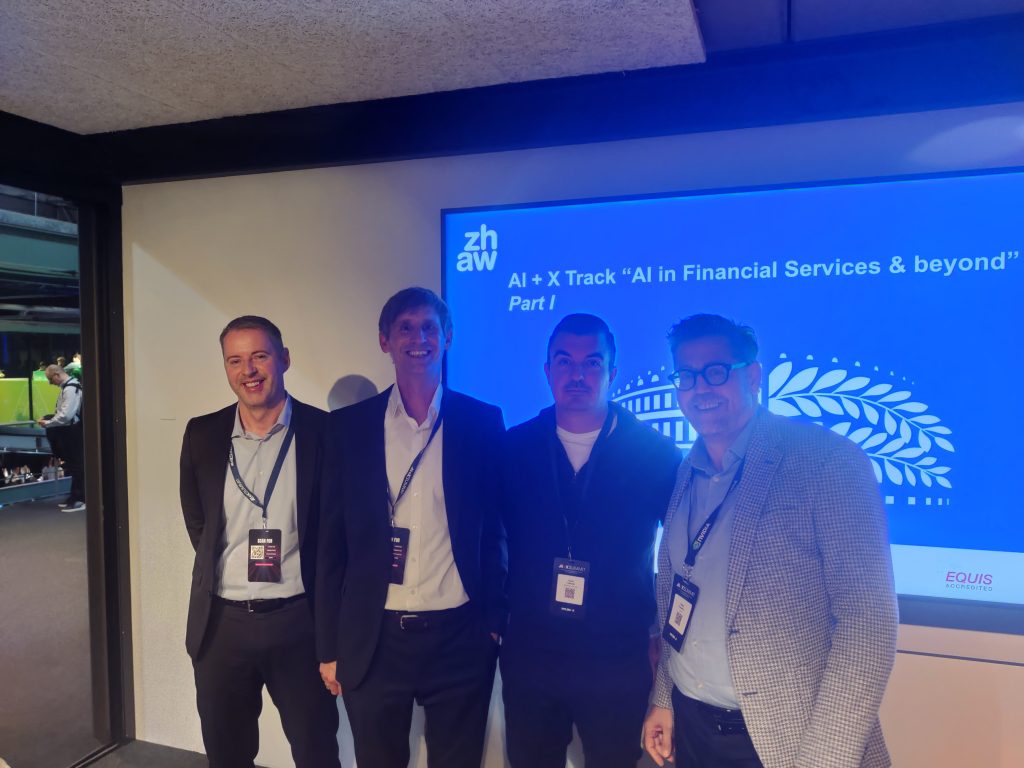
How can banks turn individual AI applications into capabilities that benefit the whole organisation? This question filled the room at the AI in Financial Services & Beyond track of the AI+X Summit in Zurich on 1 October 2026. With perspectives from ZHAW, Raiffeisen Switzerland, UBS and NVIDIA, the session explored how financial institutions are approaching the next stage of AI adoption.

The big picture: agentic AI meets reality
Dr. Patrick Hauf of ZHAW School of Management & Law opened with an overview of recent AI developments and what they mean for financial services. Agentic AI opens up opportunities to support increasingly complex workflows. But reliable deployment depends on appropriate data access, solid evaluation and human oversight. As reliance on AI grows, resilience and the choice of technology partners also become strategic questions.
Creating value in risk and compliance
Fabio Ferrari of Raiffeisen Switzerland offered a practical view on creating value with AI in risk and compliance. His key message: technology alone is not enough. It has to go hand in hand with employee enablement and organisational readiness.
Building an AI ecosystem
Dr. Michel Neuhaus of UBS Switzerland widened the lens to the development of an AI ecosystem. His presentation looked at how banks can connect AI capabilities across the organisation, with trust and governance as the foundations for sustainable value creation.
Infrastructure and economics at scale
Marc Stampfli of NVIDIA turned to the infrastructure and economics behind AI at scale. He covered AI factories, the role of different model types and the potential of transaction foundation models for financial services. He also showed how thoughtful deployment choices can help keep costs under control.
The common thread
One theme ran through all the contributions: scaling AI means building the capabilities to develop, operate and reuse successful solutions across the organisation. Three ingredients stood out:
- Shared platforms that make solutions available beyond a single team
- Reusable agentic workflows that avoid reinventing the wheel
- Skilled employees who can work with these tools confidently
Responsible deployment and resilience are integral to this foundation. As the discussion underlined, building with these priorities in mind can also make economic sense.
Thank you to Fabio Ferrari, Michel Neuhaus and Marc Stampfli, and to everyone who joined us, for an engaging exchange on the future of AI in financial services.